
Little Red Rover Beta Testing
Published:
Overview
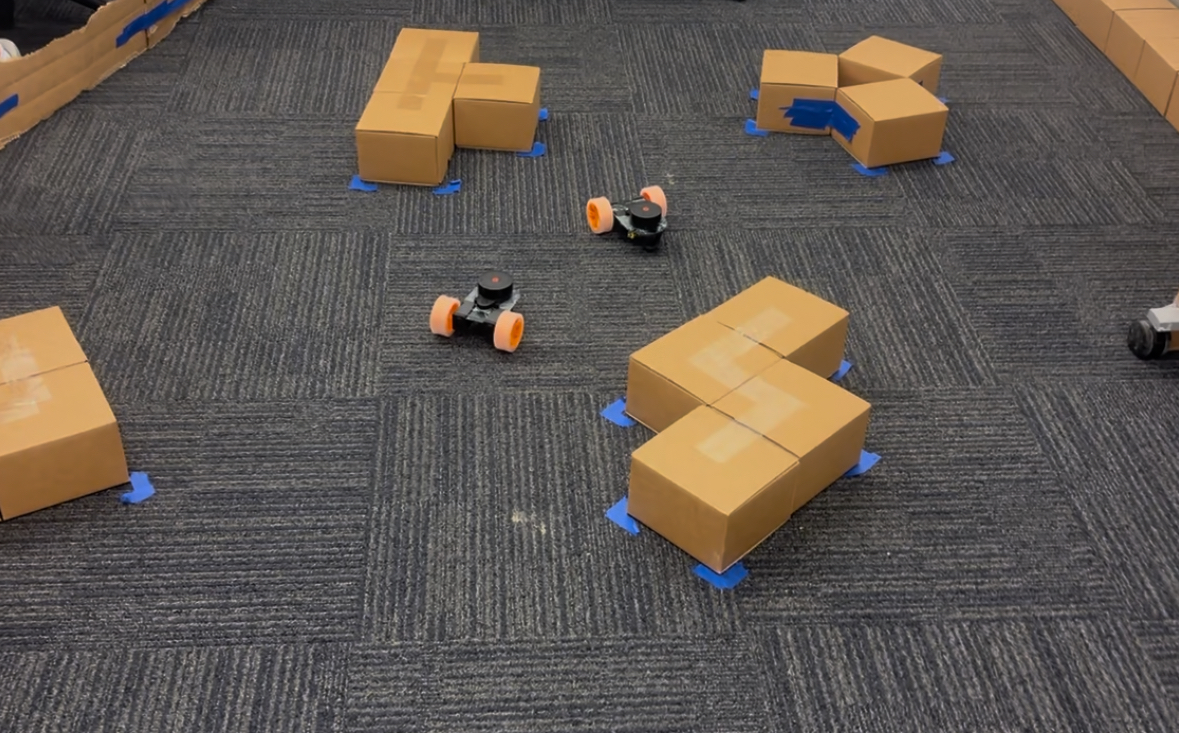
Beta testing and development work for Little Red Rover (LRR), Cornell’s first educational robot designed for introductory robotics courses. This project involved testing, debugging, and performance evaluation to prepare the platform for broader classroom and research deployment.
About Little Red Rover
Little Red Rover is an educational robot developed at Cornell to provide hands-on learning experiences in robotics fundamentals. The rover serves as a practical teaching tool for students learning motion planning, navigation algorithms, and robotic control systems.
Technical Contributions
ROS-Based Motion Planning Implementation
- Implemented and debugged ROS-based motion planning pipelines in Python
- Developed autonomous navigation capabilities using Robot Operating System framework
- Integrated sensor data processing for real-time environment perception
- Created modular code architecture for easy classroom adaptation
Path Planning & Navigation Algorithms
A* Path-Finding Implementation:
- Implemented A* algorithm for optimal obstacle navigation
- Developed collision-free trajectory generation system
- Optimized path planning for various terrain and obstacle configurations
- Ensured real-time performance for educational demonstrations
Key Features:
- Heuristic-based search for efficient pathfinding
- Dynamic obstacle avoidance
- Waypoint generation and trajectory smoothing
- Grid-based environment representation
Performance Evaluation & Analysis
Experimental Setup:
- Designed and executed systematic experiments to evaluate rover performance
- Measured navigation accuracy, path efficiency, and response times
- Tested edge cases including tight spaces, dynamic obstacles, and sensor failures
- Analyzed algorithm behavior under various environmental conditions
Analysis Tools:
- Python: Core scripting and algorithm implementation
- NumPy: Numerical computations and data processing
- Matplotlib: Visualization of paths, trajectories, and performance metrics
Technical Stack
- Framework: Robot Operating System (ROS)
- Language: Python
- Libraries: NumPy, Matplotlib
- Algorithms: A* pathfinding, collision detection
- Tools: ROS navigation stack, rviz visualization
Testing Results
Key Findings
- Identified sensor calibration issues affecting navigation accuracy
- Discovered timing bugs in ROS node communication
- Found edge cases in narrow passage navigation
- Documented platform limitations for educational use cases
Impact & Outcomes
Platform Readiness:
- Successfully prepared LRR for deployment in introductory robotics courses
- Documented comprehensive setup and troubleshooting guides
- Validated educational value through pilot testing sessions
- Established baseline performance benchmarks for future improvements
Educational Value:
- Provides hands-on experience with real robotics systems
- Demonstrates practical applications of path planning algorithms
- Enables students to experiment with ROS in controlled environment
- Supports learning objectives in robotics fundamentals courses
Technical Contributions:
- Production-ready motion planning implementation
- Robust navigation system tested across diverse scenarios
- Comprehensive bug documentation for future maintenance
- Performance baselines for algorithm optimization
Future Enhancements
- Integration with more advanced SLAM algorithms
- Multi-robot coordination capabilities
- Enhanced sensor fusion for improved perception
- Web-based interface for remote rover control
Links
- Platform: Little Red Rover (LRR) - Cornell Educational Robotics
- Topics: Robotics, ROS, Python, Path Planning, A* Algorithm, Motion Planning, Beta Testing